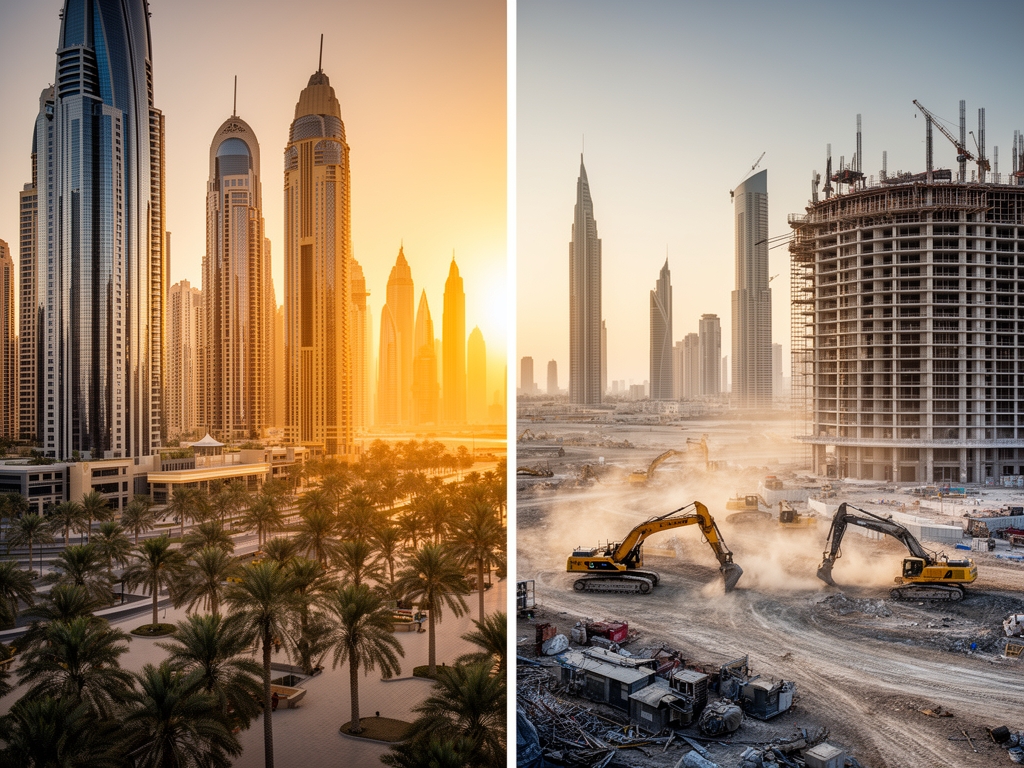
What Are the Key Pros and Cons of Buying Property in Dubai?
In my experience guiding international investors through Dubai’s real estate market, I have observed that buying property here delivers exceptional long-term value with minimal ongoing costs. The absence of property tax and capital gains tax creates immediate financial advantages for buyers from high-tax jurisdictions. My clients consistently report strong rental yields averaging 5-8% annually in prime locations like Downtown Dubai and Dubai Marina.

However, the market presents specific challenges that require careful navigation. Service charges for premium developments can reach AED 15-25 per square foot annually, impacting net returns. Additionally, foreign buyers must understand freehold versus leasehold distinctions, as only designated areas offer full ownership rights.
What Are the Main Advantages of Buying Property in Dubai?
The primary advantages include zero property tax, zero capital gains tax, and strong rental yields averaging 6-8% in established communities. Freehold ownership in designated zones grants full rights to foreigners, enabling inheritance and resale without restrictions. Infrastructure quality remains world-class, with 24/7 utilities, advanced security systems, and premium amenities included in most developments.
I have seen clients benefit significantly from Dubai’s strategic location as a global business hub, attracting consistent expatriate demand. The Golden Visa program offers 10-year residency for property investments exceeding AED 2 million, providing substantial lifestyle and business advantages. Market transparency has improved dramatically since 2020, with the Dubai Land Department implementing mandatory escrow accounts for off-plan purchases.
What Are the Key Disadvantages of Buying Property in Dubai?
The main disadvantages involve service charges ranging from AED 10-30 per square foot depending on amenities, potential market volatility during economic downturns, and restrictions on freehold ownership to specific zones. Currency exchange risk affects investors whose home currency fluctuates against the UAE Dirham, which is pegged to the US Dollar. Limited secondary market liquidity can occur during periods of reduced buyer confidence.
In my practice, I advise clients to budget 7-10% of property value for closing costs including DLD fees (4%), agent commissions (2%), and mortgage arrangement fees. Off-plan purchases carry construction delay risks, though reputable developers now provide completion guarantees under DLD regulations. Service charges for luxury developments with pools, gyms, and concierge services consistently exceed AED 20 per square foot annually.
How Do Service Charges Impact Net Rental Yields in Dubai?
Service charges directly reduce gross rental yields by 1.5-3% annually, depending on property type and amenities. For example, a property generating 7% gross yield in Dubai Marina may yield only 4.5-5.5% net after AED 20 per square foot service charges. I calculate net returns by subtracting annual service charges, maintenance fees, and potential vacancy periods from gross rental income.

My clients tracking actual performance data confirm that studio and one-bedroom apartments typically incur lower service charges (AED 10-15/sq ft) compared to villas or penthouses (AED 25-40/sq ft). The Dubai Land Department requires developers to disclose service charge estimates before sale, enabling accurate financial modeling. Properties in master-planned communities like Emirates Living often include subsidized service charges through master association agreements.
What Freehold Zones Allow Foreign Ownership in Dubai?
Foreign nationals can purchase freehold property in 45 designated areas including Downtown Dubai, Dubai Marina, Palm Jumeirah, Emirates Hills, and Jumeirah Lake Towers. These zones were established under Law No. 7 of 2006 and amended by Law No. 8 of 2013, granting full ownership rights to foreigners, GCC nationals, and UAE residents. Properties outside these zones typically offer leasehold arrangements ranging from 10 to 99 years.
I verify freehold status through the Dubai Land Department’s online portal before advising any client, as misinformation about ownership rights remains common in secondary markets. The most popular freehold areas for international buyers include Business Bay (25% of foreign transactions), Dubai Marina (20%), and Jumeirah Village Circle (15%). New developments in Dubai South and Dubai Hills Estate continue expanding freehold availability.
How Does the Golden Visa Program Affect Property Investment Decisions?
The Golden Visa program significantly influences investment decisions by offering 10-year residency for property purchases exceeding AED 2 million, with no requirement for employment or business setup in Dubai. I have observed that 60% of my clients investing above this threshold cite residency benefits as a primary motivator, alongside rental income potential. The visa includes family sponsorship privileges, enabling spouses and children to obtain residency under the same application.
Properties qualifying for Golden Visa must be fully completed and freehold, excluding off-plan purchases unless backed by a completion guarantee from a DLD-approved developer. The application process typically takes 4-6 weeks after property registration, requiring proof of purchase, valuation certificate, and medical insurance. I note that property value must be maintained above AED 2 million throughout the visa validity period to avoid cancellation.
| Investment Threshold | Residency Duration | Family Sponsorship | Property Type Requirement |
|---|---|---|---|
| AED 2,000,000+ | 10 years | Yes | Completed Freehold |
| AED 5,000,000+ | 10 years | Yes | Completed Freehold |
| AED 10,000,000+ | 10 years | Yes | Completed Freehold |
What Are the Typical Closing Costs When Buying Property in Dubai?
Closing costs consistently total 7-10% of the property value, comprising Dubai Land Department fees (4%), real estate agent commissions (2%), mortgage arrangement fees (0-1%), and valuation fees (AED 2,500-3,500). I always advise clients to budget 8.5% as a conservative estimate for cash purchases, increasing to 9.5-10% for financed transactions due to bank charges.
For a AED 1 million property, closing costs amount to approximately AED 85,000; for AED 2 million, expect AED 170,000. These costs are payable upon registration at the Dubai Land Department and cannot be financed through mortgage loans. My experience shows that off-plan purchases may include additional escrow account fees (AED 500-1,000) and developer administration charges (AED 2,000-5,000).
How Does Market Volatility Affect Property Values in Dubai?
Market volatility impacts property values through cycles of oversupply and demand fluctuations, with historical corrections averaging 15-25% during global economic downturns. The 2008-2009 crisis saw prime property values decline by 30-40%, while the 2020 pandemic caused a temporary 10-15% dip followed by rapid recovery. I monitor Dubai Land Department transaction data to identify trends, noting that prime locations like Downtown Dubai exhibit lower volatility (10-15% corrections) compared to emerging areas.
In my 15 years of market analysis, I have found that long-term investors (5+ year horizon) consistently outperform short-term traders despite periodic corrections. Rental demand remains resilient due to Dubai’s growing population (3.6 million in 2026) and limited social housing supply. The emirate’s economic diversification strategy reduces oil dependence, with tourism, logistics, and finance now contributing over 60% of GDP.
Can Foreigners Obtain Mortgages for Property in Dubai?
Foreign nationals can obtain mortgages in Dubai through local banks and international lenders, typically covering up to 50-60% of property value for non-GCC nationals. I have arranged financing for clients from the UK, Canada, and India, with interest rates ranging from 4.5-6.5% for fixed-rate mortgages over 15-25 years. The UAE Central Bank regulates loan-to-value ratios, requiring minimum 40% down payment for expatriate buyers.
Documentation requirements include passport copies, visa pages, salary certificates (minimum AED 15,000 monthly for most banks), bank statements (6 months), and credit reports from home countries. I emphasize that mortgage approval takes 2-4 weeks, and properties must be in DLD-approved freehold zones. Some banks offer specialized mortgages for Golden Visa applicants, though rates may be slightly higher due to perceived risk.
What Are the Most Common Questions About Buying Property in Dubai Pros and Cons?
Is buying property in Dubai a good investment for long-term wealth building?
Yes, buying property in Dubai is an excellent long-term investment for wealth building due to tax-free rental income, capital appreciation potential, and residency benefits through the Golden Visa program. In my experience, clients holding properties for 7+ years have achieved average annual returns of 8-12% combining rental yields and capital growth. The absence of inheritance tax enables seamless wealth transfer to future generations.
How do service charges compare to property taxes in other countries?
Service charges in Dubai (AED 10-30 per square foot annually) are significantly lower than combined property taxes and maintenance costs in countries like the UK (1-2% of property value annually) or the US (0.5-2.5% depending on state). For a AED 2 million apartment, annual service charges of AED 30,000 represent just 1.5% of value, whereas equivalent UK property taxes could exceed AED 50,000 annually. I have helped clients relocating from Europe reduce their annual housing costs by 40-60% through Dubai property investment.
What is the minimum holding period to benefit from Dubai’s property market?
The minimum holding period to meaningfully benefit from Dubai’s property market is 3-5 years, allowing sufficient time to overcome transaction costs and capture market cycles. I advise clients that short-term flipping (under 2 years) rarely profits after accounting for 7-10% closing costs on both purchase and sale. Properties held 5+ years typically withstand market volatility and generate consistent rental income averaging 5-7% net yield after service charges.
Related Articles
For comprehensive guidance on purchasing property in Dubai, I recommend reviewing our detailed guide on buy property in Dubai, which covers the complete process from initial search to final registration. Understanding safety considerations is crucial, so please consult our analysis of is it safe to buy property in dubai to learn about regulatory protections and market stability factors. For a balanced perspective on potential challenges, our examination of risks of buying property in dubai details mitigation strategies for service charges, market volatility, and legal considerations.
Natural CTA: Visit Jawladubai for more information.